A lift station is noticed when it overflows. A controller at the station reports the wet well level, both pumps and the high level float over cellular, and a fixed detector watches the hydrogen sulfide that builds up in the well, so the call comes before the spill.
Without telemetry, the station reports itself by spilling.
When the duty pump fails silently, the standby carries the station alone until it fails too.
Hydrogen sulfide accumulates in a wet well and corrodes what is in it, and is a danger to whoever opens the hatch.
| Signal | How it is read | What it tells you |
|---|---|---|
| Wet well level | Ultrasonic level sensor over RS485, or a pressure transducer | How close the well is to overflowing |
| High level float | Dry contact on a digital input | A hard alarm that does not depend on the level sensor |
| Pump run and current | Dry contacts and clamp-on current sensors | Which pump is running, and whether it is pumping |
| Hydrogen sulfide | Fixed gas detector over RS485 | Gas in the well, before anyone opens the hatch |
| Mains presence | Supply sense on a digital input | A power cut at the station |
Four ports on one Genesis controller, and RS485 devices share a bus, so most sites need one unit.
Minimum and maximum on each sensor, with alerts to the people on the list. Acknowledgement is recorded against the alarm, so a handover shows what was already seen.
Readings are stored on the controller with their time and sent in order when coverage returns, so the record has no gap where the incident was.
Full-resolution history, exported to Excel for a report, an insurer or a contractor, or pulled into your own system through the REST API.
A device can be shared with a service company without sharing a login, and they see nothing else on your account.
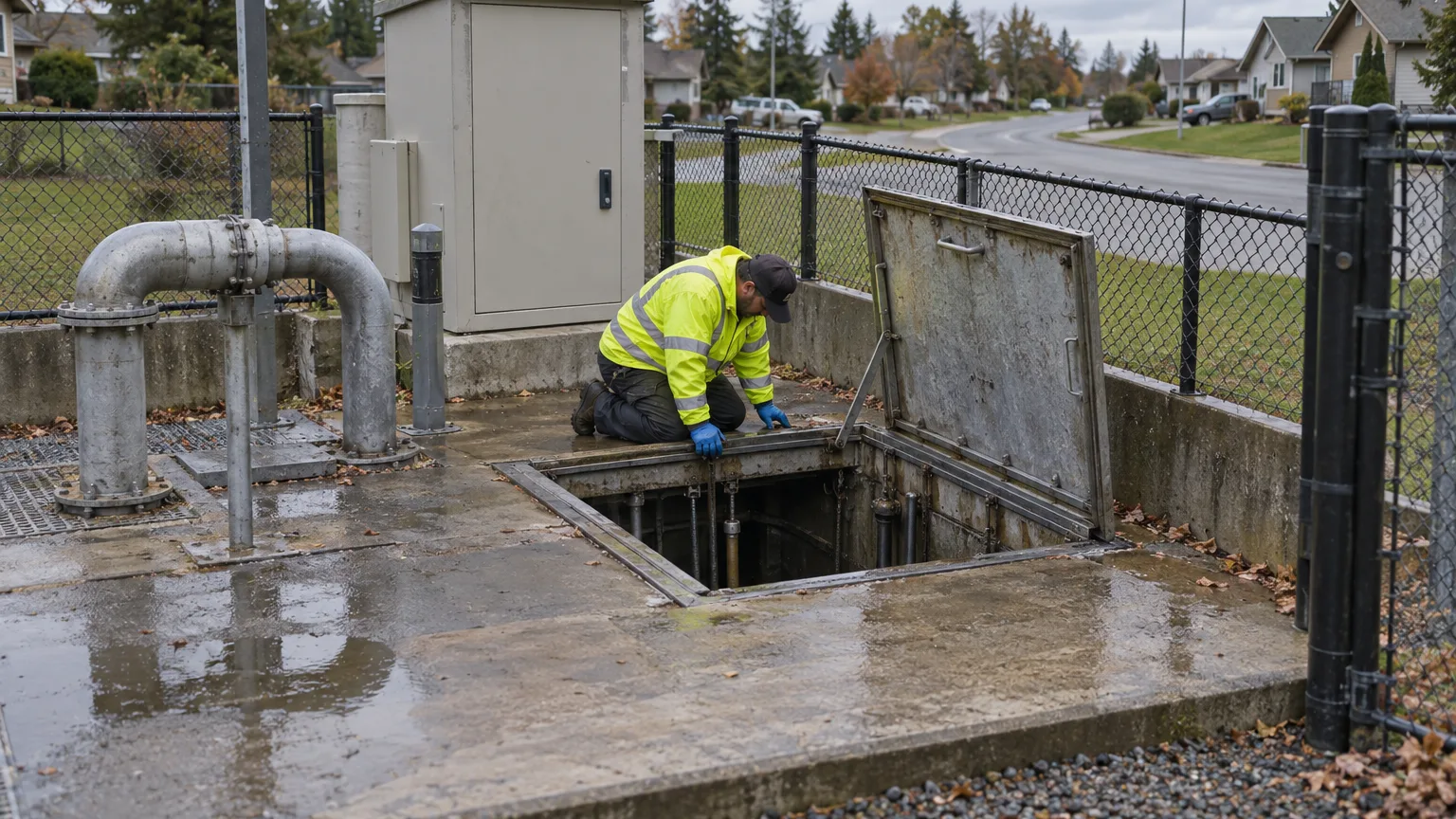
The controller runs on its own battery and keeps reporting, so the power cut itself becomes the alarm.
Yes. Its own relays drive a fan or a beacon at the station, with no network involved. The controller adds the record and the remote alert.
Neither. The controller connects over 4G-LTE and runs on its rechargeable battery, with solar or a 6 to 32 V DC supply where readings need to be frequent.
Usually, yes. Over fifty sensor types are supported today and more are added on request, including RS485 Modbus instruments from their register map.
What needs watching, which instruments are already there, and whether the site has power and coverage. We come back with what a Genesis would read and what the installation involves.
Talk to us →