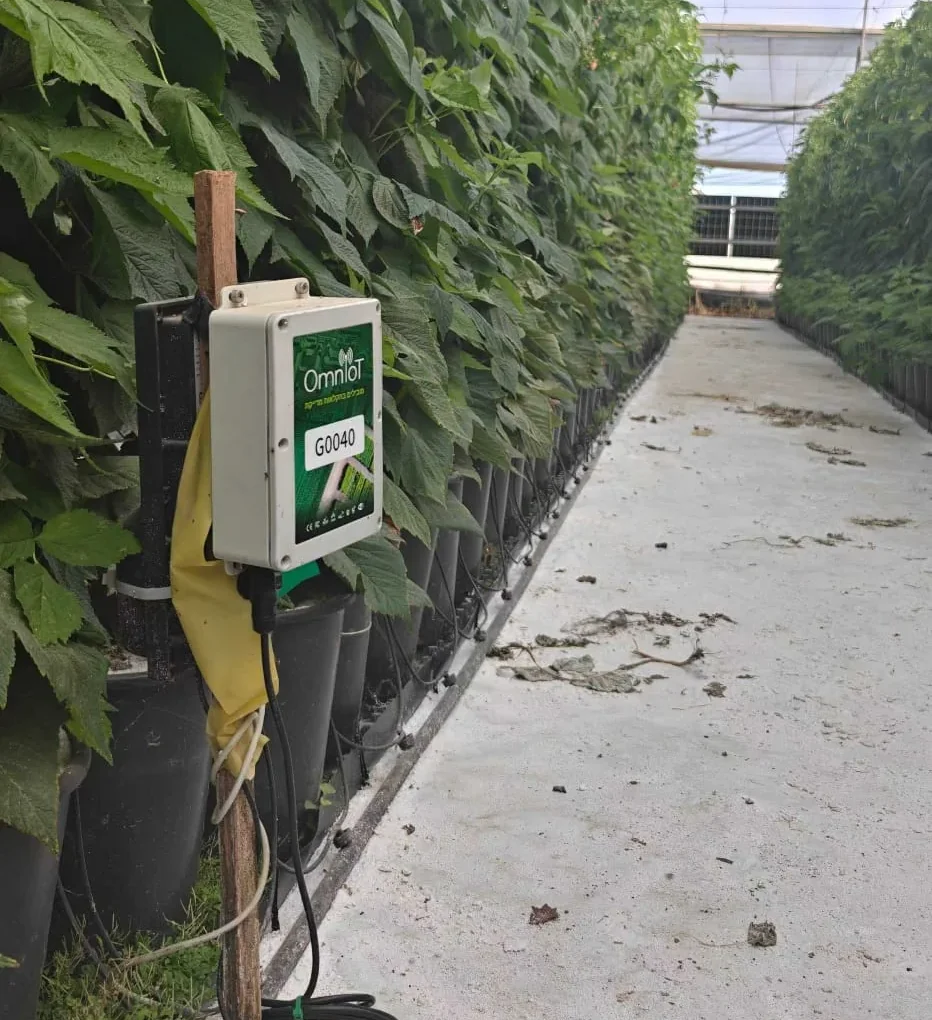
A Genesis controller mounted on a post in a commercial greenhouse, with drip irrigation lines running along the crop row behind it

Industrial IoT controllers that read any sensor protocol on any port.

Genesis is a cellular field controller for sites with no cabinet, no mains feed and no panel builder. You set what each port reads from the dashboard instead of rewiring it, so one box handles a Modbus probe, an analogue transducer and a 1-Wire string at the same time. It runs for months on battery and solar, and it switches relays and solenoids as well as reading them.

Any protocol RS485, analogue, I2C, 1-Wire, SDI-12, per port
Months off-grid Battery and solar, under 30 µA asleep
Drives outputs Relays, latching relays, bistable solenoids
Fault detection A bad sensor publishes an error, not a reading
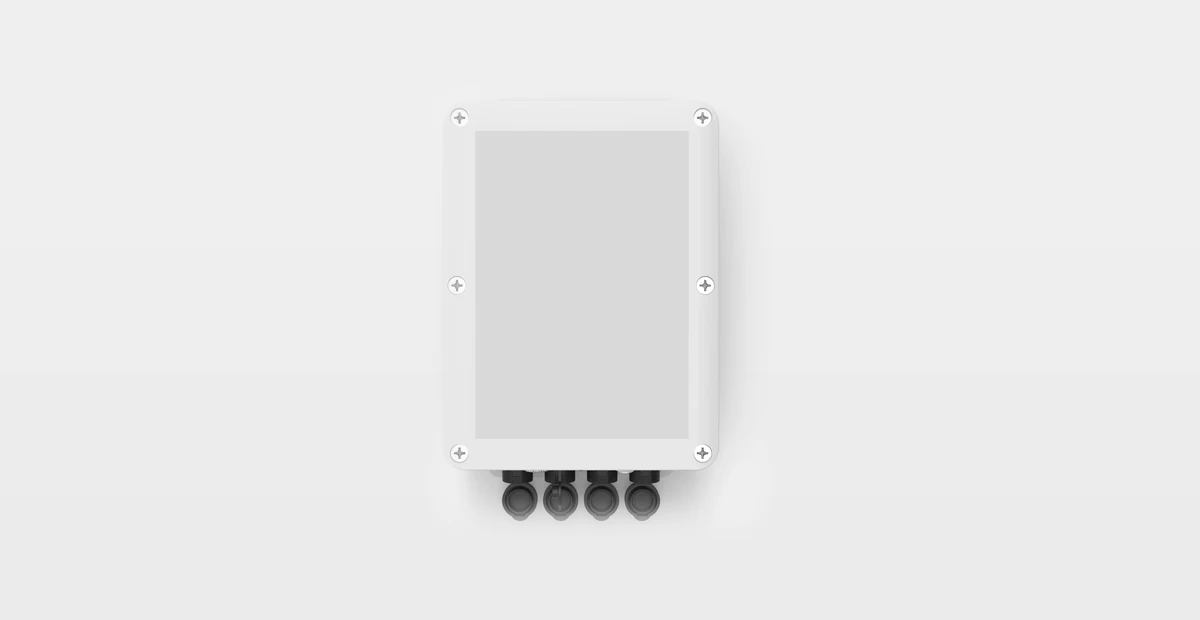
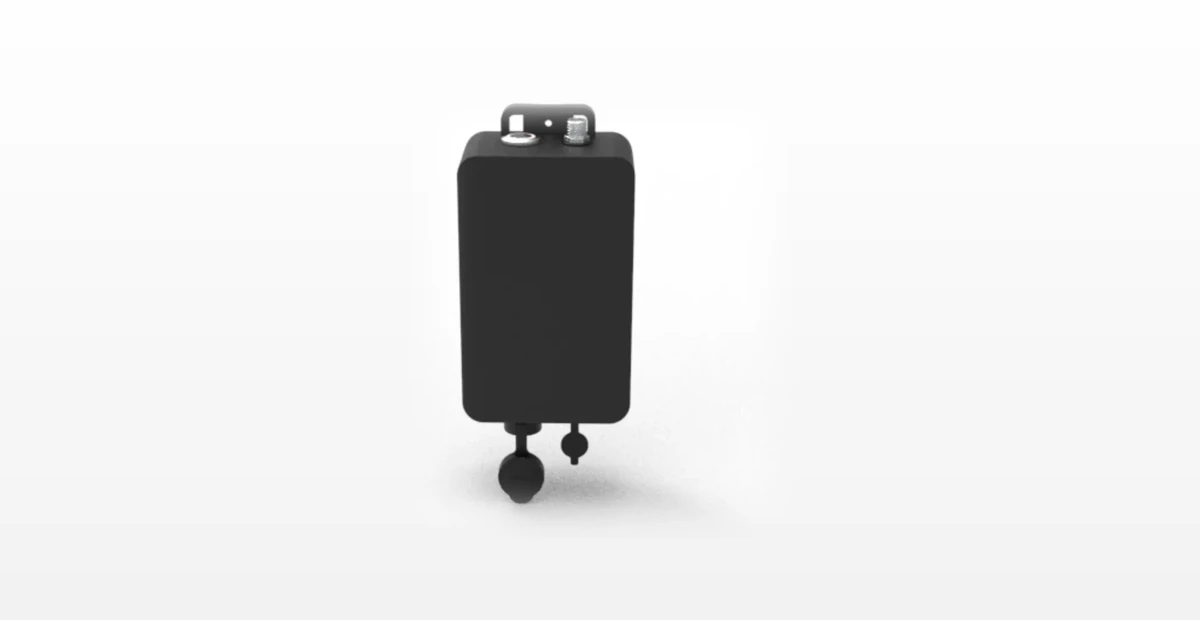
Genesis and Genesis Lite

Two sizes of the same controller. What separates them is how many points one box covers and how much power it has to spend. The protocol list, the cloud, the API and the fault detection are identical on both.

What separates this from the controller next to it

Plenty of field controllers read Modbus and run on a battery. These four are the ones that change what a deployment costs to install and what the data is worth once it arrives.

Every port takes every protocol

The same physical connector carries an RS485 probe, an analogue transducer, an I2C sensor or a 1-Wire string, depending on how the port is set in the dashboard. Changing what a port reads is a configuration change rather than a site visit, and there is no second part number to order.

Control outputs, on battery power

Switched 5 V and 12 V outputs drive relays, latching relays and bistable solenoids over an H-bridge, with rules and dwell handled on the device. Pulse actuation is what makes that survivable on a battery: a relay held energised would flatten it in days. Most battery powered cellular devices in this category monitor and stop there.

Bring the sensors you already own

Over fifty sensor types are supported today and more are added on request. This category normally sells you the box in order to sell you the probes for the next ten years. Keep the instruments your team already trusts and already calibrates.

Faults are detected, not averaged in

A disconnected analogue input does not read as an error, it reads as noise, and noise lands on a chart looking like data. Genesis checks each port before it samples and publishes a fault code when the check fails.

OmniCloud is included, and so is the option to ignore it

Every controller in this category makes you pick a platform. One vendor ships data to any endpoint and leaves you to go find the endpoint; another puts you inside theirs and keeps you there. Both routes below are supported for the life of the product, and neither one is an upsell.

Use the dashboard

A multi-tenant cloud with role based permissions, charts, reports, thresholds, alerts with push notification, and device sharing across accounts, so an operator owns the hardware while their service provider sees it and nobody buys the device twice.

How multi-tenant works →

Or drive it yourself

An open REST API with scoped service tokens covers what the dashboard covers: device management, per port configuration, permissions, and control commands that fire the relay. Build your own front end, or feed an existing system directly.

Ship it under your name

The same platform ships as a mobile app carrying your name, your icon and your colors, published on iOS and Android under your developer identity and maintained for the life of the product.

Apps under your brand →

Where Genesis controllers are deployed

The same hardware and the same cloud, pointed at whatever a given site needs measured and switched.

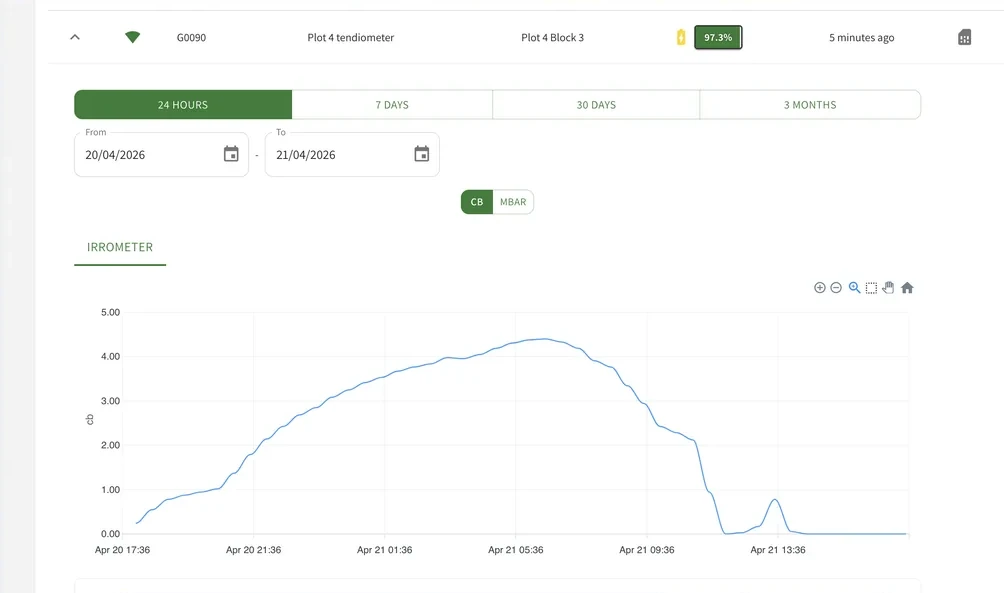
The OmniCloud dashboard showing live device telemetry for a production tenant

In production since 2023

The screenshot above is a live customer tenant, not a demo build or a design mock. OmniCloud has been in continuous service since 2023 and carries millions of sensor readings a month from deployed controllers, on the same hardware and the same cloud sold on this site.

2023
In continuous production since
50+
Sensor types supported today
What building this on AWS IoT Core costs instead →

Or have us build the whole connected product

Some companies want a controller to integrate into something they already build. Others want a finished connected product with their name on it and have no firmware or cloud team to build one. We take on both. The second starts with a conversation about what the product has to do in the field.

Explore ODM services →

Send us the sensor list

The quickest way to find out whether Genesis fits is to tell us what is being measured, how many points there are, and whether the site has power and cellular coverage. We come back with which controller to specify and what the deployment looks like.

Talk to us →