IoT connectivity for agricultural equipment manufacturers

Equipment buyers have started asking what the machine reports and whether there is an app, and answering that properly means hardware, firmware, a cloud and two mobile apps. That is a two-year detour from the product you actually build. This is the layer that answers it for you, and it ships under your brand rather than ours.

Who this is for

Three shapes of company, one problem: equipment in the field that nobody can see.

Equipment manufacturers

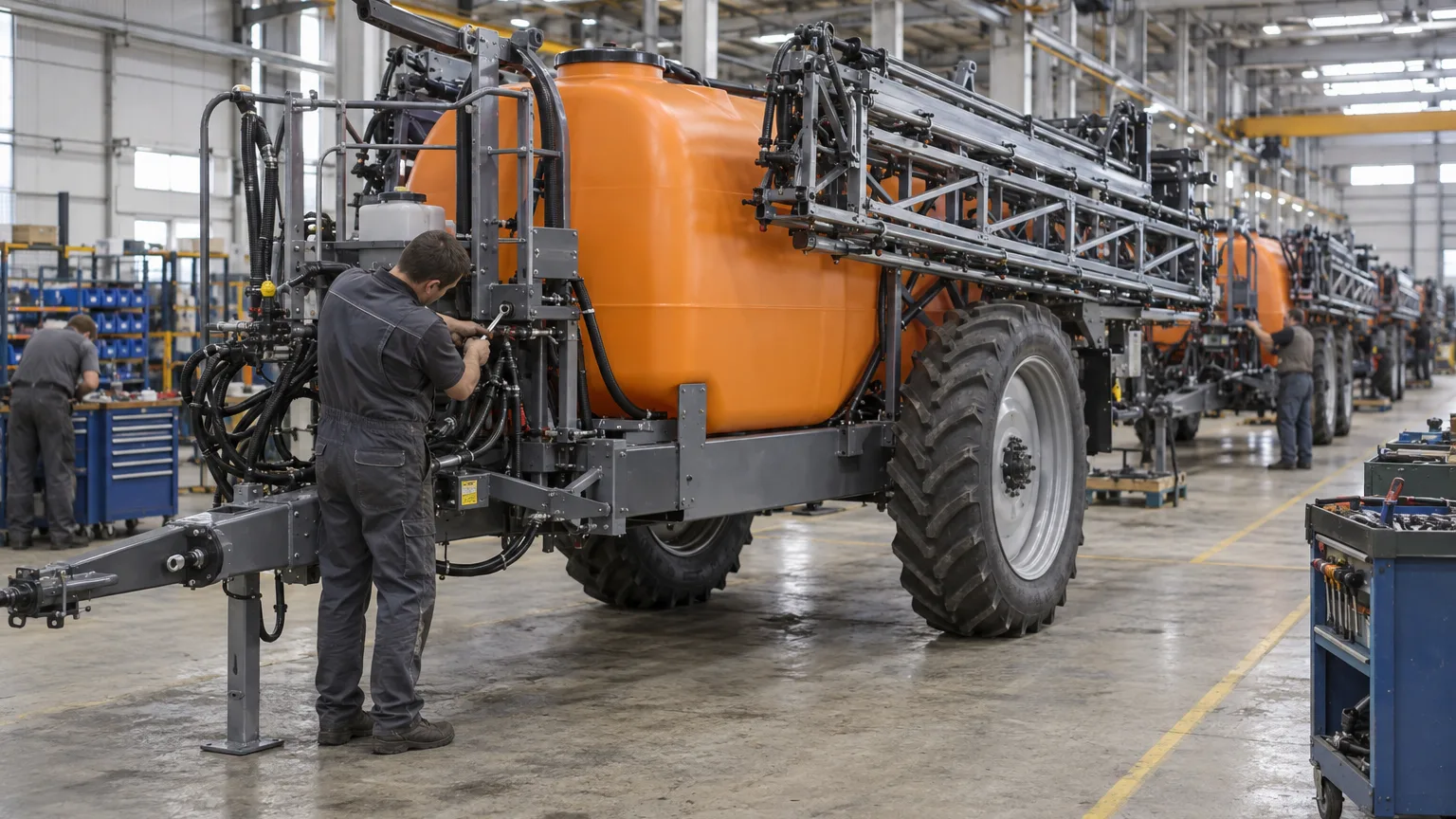
You build fertigation skids, dosing systems, pump stations, feed lines, grain handling, or greenhouse climate equipment. Your buyers now ask what the machine reports and whether there is an app. Building a firmware and cloud team to answer that is a two-year detour from the product you actually make.

Retrofit and upgrade programmes

You have an installed base of machines already in service and no way to see any of them. A controller wired into the existing panel turns a fleet you have already sold into a fleet you can support, quote service contracts against, and upgrade over the air.

Distributors and service companies

You sell and maintain other manufacturers equipment across many sites. You need one pane of glass over mixed hardware, per-customer tenancy so each operator sees only their own machines, and a support channel that does not start with a drive out.

What you get

Four layers, and you can take the first two without the rest.

A controller that fits the panel you already have

Four modular ports, each configured from the cloud for whichever protocol the machine already speaks: RS485 Modbus, analogue, digital, I2C, 1-Wire, SDI-12, UART. No redesign of your electronics, and no committing a port to a sensor family before you know what the next revision needs.

Outputs, so the machine acts

Switched 5 V and 12 V outputs drive relays, latching relays and bistable solenoids over an H-bridge, with rules and dwell handled on the device. The unit closes the loop at the machine rather than reporting to a screen and waiting for someone.

Your brand on the cloud and the app

Multi-tenant cloud with role based permissions, reports, thresholds and alerts, plus iOS and Android apps that ship under your identity. Your customers open your app and see your machines. Nothing in the experience says OmnIoT.

Or no cloud from us at all

An open REST API with scoped service tokens covers everything the dashboard covers, including the control commands. If you already run a portal your customers log into, the machines report into that instead and we stay out of the relationship.

What a manufacturer gets held to

Your name is on the machine, so the failure modes that matter are the quiet ones.

A failed sensor reports as failed

A disconnected analogue input reads as noise rather than an error, and on most platforms that noise reaches your customer looking like data from your machine. Every port is checked before it is sampled and a fault code is published when the check fails. For a manufacturer that is the difference between a support call and a warranty argument.

It survives the network being gone

Readings are held locally and delivered in order once the link returns, so an outage leaves no hole in the record a customer is reading. The on-board clock keeps real time through the gap, so a buffered reading still knows when it happened.

It updates without a truck

Firmware goes over the air by cellular. When a site has no coverage at all, holding the button raises the unit own access point and firmware loads from a phone standing next to it. No flashing rig, no serial cable, and the enclosure is never opened.

Frequently asked questions

Do we have to redesign our electronics to use this?

No. The controller reads whichever protocol your machine already speaks, and the port is assigned from the cloud rather than fixed in hardware. In a retrofit it wires into the existing panel. The usual integration work is agreeing what the machine should report and what it should be allowed to switch.

Can it ship under our brand rather than yours?

Yes. The cloud is multi-tenant and brandable, and the iOS and Android apps are deployed under your identity in the App Store and Play Store. Your customers see your product. The alternative is the open API, where you build the front end yourself and we are not visible at all.

Can it control the machine, or only monitor it?

Both. Outputs drive relays, latching relays and bistable solenoids through an H-bridge, with rules and dwell evaluated on the device so a lost connection does not leave the machine waiting on the cloud.

What does it need for power and connectivity?

It runs from a 6 to 32 V DC supply, which covers most equipment panels, and it also runs on battery with solar where the machine has no supply to give it. Connectivity is 4G-LTE with Wi-Fi and Bluetooth built in, and the expansion slot takes external LoRa, LoRaWAN and GPS modules for project-specific builds.

How long does it run when there is no power on the machine?

That is set by the transmit and collection intervals, and both are changed from the dashboard after the unit is installed rather than fixed at manufacture. Always on is about two days. One transmit a day with hourly collection is years. Tell us the duty cycle the product needs and we will tell you where it lands.

We already have an installed base. Is retrofit realistic?

It is the more common starting point. A machine already in service has a panel, a supply and something worth reading, which is most of what a deployment needs. Retrofit also gives you the fleet visibility to sell service contracts against equipment you have already been paid for.

How is an engagement scoped?

Per product line. What the machine reports, what it is allowed to switch, how many units in the first batch, and whether you want the branded cloud or only the API. Pilots normally start with a small run on one product before the whole line.
Tell us what the machine should report

Send the product line, what it should report, what it should be allowed to switch, and roughly how many units. You get back whether the ports cover it and what a first batch looks like.

Talk to us →