Gas detector catalog: fixed detectors by target gas
One detector body, one wiring standard and one spares list, with a sensing cell per gas. Pick the gas to see its ranges, where it is specified and how it is mounted.
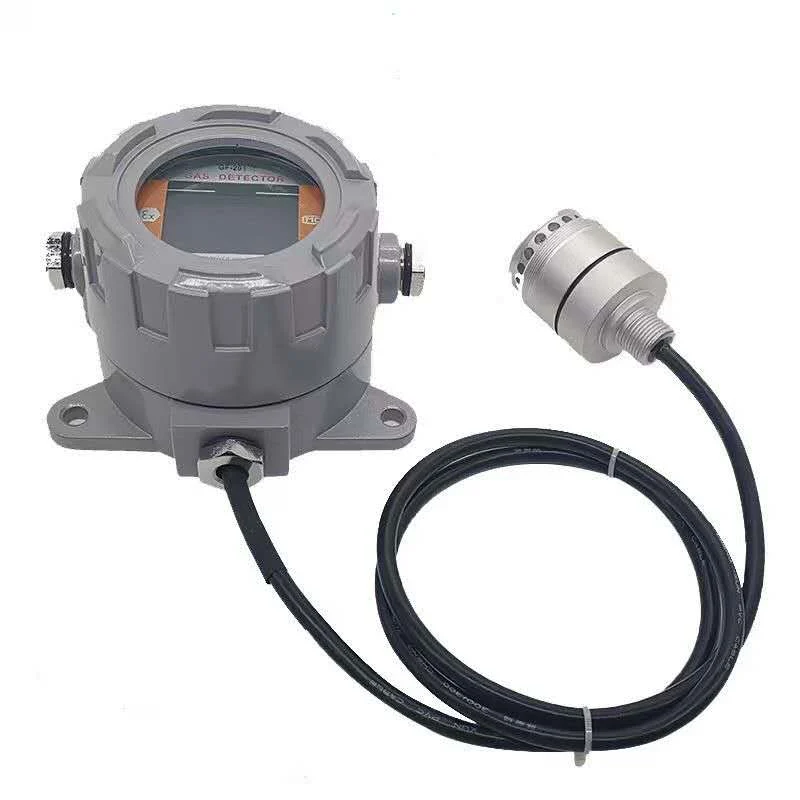
One detector body, one wiring standard and one spares list, with a sensing cell per gas. Pick the gas to see its ranges, where it is specified and how it is mounted.
Selectable ranges, resolution and response time for each sensing cell. The right range for a given point is part of the scoping conversation.
| Gas | Formula | Selectable ranges | Resolution | Response (T90) |
|---|---|---|---|---|
| Methane | CH4 | 0-10 / 0-50 / 0-100 %VOL·%LEL | 0.1 %LEL / 0.01 %VOL | ≤25 s |
| Combustible gas | EX | 0-100 %LEL | 0.1 %LEL | ≤25 s |
| Carbon monoxide | CO | 0-500 / 2000 / 5000 / 10000 ppm | 0.1 / 1 ppm | ≤15 s |
| Hydrogen sulfide | H2S | 0-10 / 20 / 50 / 100 / 500 / 1000 ppm | 0.01 / 0.1 / 1 ppm | ≤60 s |
| Oxygen | O2 | 0-30 / 0-100 %VOL | 0.01 %VOL | ≤15 s |
| Carbon dioxide | CO2 | 0-1000 / 2000 / 5000 ppm / 0-20 %VOL | 1 ppm / 0.01 %VOL | ≤15 s |
| VOC | VOC | 0-10 / 50 / 100 / 500 / 1000 ppm | 0.01 / 0.1 / 1 ppm | ≤20 s |
| Benzene | C6H6 | 0-1 / 10 / 50 / 100 / 500 / 1000 ppm | 0.01 / 0.1 ppm | ≤30 s |
| Xylene | C8H10 | 0-1 / 10 / 50 / 100 / 500 / 1000 ppm | 0.01 / 0.1 ppm | ≤30 s |
| Styrene | C8H8 | 0-20 / 50 / 100 / 500 / 1000 ppm | 0.01 / 0.1 / 1 ppm | ≤30 s |
| Formaldehyde | CH2O | 0-5 / 10 / 20 / 100 / 200 ppm | 0.01 / 0.1 ppm | ≤30 s |
| Ammonia | NH3 | 0-50 / 100 / 200 / 500 / 1000 ppm | 0.01 / 0.1 / 1 ppm | ≤30 s |
| Nitrogen | N2 | 0-100 %VOL | 0.01 / 0.001 %VOL | ≤15 s |
| Ozone | O3 | 0-10 / 50 / 100 / 500 / 1000 ppm | 0.01 / 0.1 / 1 ppm | ≤20 s |
| Hydrogen | H2 | 0-1000 / 2000 / 5000 ppm / 0-4 %VOL | 1 ppm / 0.01 %VOL | ≤20 s |
| Tetrahydrothiophene | THT | 0-50 / 100 / 200 ppm·mg/m³ | 0.01 ppm | ≤30 s |
| Nitrogen oxides | NOx | 0-100 / 200 / 500 / 1000 ppm·mg/m³ | 0.01 / 0.1 ppm | ≤20 s |
| Nitric oxide | NO | 0-100 / 200 / 500 / 1000 ppm·mg/m³ | 0.01 / 0.1 ppm | ≤20 s |
| Nitrogen dioxide | NO2 | 0-100 / 200 / 500 / 1000 ppm·mg/m³ | 0.01 / 0.1 ppm | ≤20 s |
| Sulfur dioxide | SO2 | 0-100 / 200 / 500 / 1000 ppm·mg/m³ | 0.01 / 0.1 ppm | ≤20 s |
| Phosphine | PH3 | 0-5 / 10 / 20 / 50 / 100 ppm | 0.01 ppm | ≤30 s |
| Ethylene | C2H4 | 0-50 / 100 / 200 / 500 / 1000 ppm | 0.01 / 0.1 / 1 ppm | ≤15 s |
| Hydrogen chloride | HCl | 0-20 / 50 / 100 ppm | 0.01 / 0.1 ppm | ≤25 s |
| Chlorine | Cl2 | 0-10 / 20 / 50 / 100 / 200 ppm | 0.01 / 0.1 ppm | ≤20 s |
| Chlorine dioxide | ClO2 | 0-20 / 50 / 100 / 500 / 1000 ppm | 0.01 / 0.1 / 1 ppm | ≤30 s |
| Trichloroethylene | C2HCl3 | 0-20 / 50 / 100 ppm | 0.01 / 0.1 ppm | ≤25 s |
| Cyanide (on request) | CN | 0-20 / 100 / 200 ppm | 0.01 / 0.1 ppm | ≤30 s |
| Hydrogen cyanide | HCN | 0-20 / 100 / 200 ppm | 0.01 / 0.1 ppm | ≤30 s |
| Ethylene oxide | C2H4O | 0-50 / 100 / 200 / 500 / 1000 ppm | 0.01 / 0.1 / 1 ppm | ≤30 s |
| Hydrogen peroxide | H2O2 | 0-20 / 50 / 100 / 200 / 1000 ppm | 0.01 / 0.1 / 1 ppm | ≤30 s |
| Arsine | AsH3 | 0-5 / 10 / 20 ppm | 0.01 ppm | ≤30 s |
| Hydrogen fluoride | HF | 0-5 / 10 / 20 ppm | 0.01 ppm | ≤30 s |
| Fluorine | F2 | 0-5 / 10 / 20 ppm | 0.01 ppm | ≤30 s |
Specified in ppm, in a range chosen around the exposure limits that apply on the site. The low alarm warns and the high alarm acts.
Specified in %LEL, so the alarm trips at a fraction of the concentration at which the gas could ignite. Mounting height follows whether the gas is lighter or heavier than air.
Specified in %VOL, with alarms on both sides of normal air: depletion where an inert gas can displace it, enrichment where oxygen itself can leak.
The cell changes. Everything a contractor wires and a technician services stays the same.
| Sampling | Diffusion, pump suction optional |
|---|---|
| Analogue output | 4-20 mA, 3-wire (2-wire optional) |
| Digital output | RS485, Modbus RTU |
| Alarm outputs | Two relays, normally open, AC 120 V 0.5 A / DC 24 V 1 A |
| Supply | 24 VDC (12 to 30 VDC), 2 W or less |
| Display | LCD with backlight |
| Enclosure | Flameproof aluminium alloy, IP65 |
| Cable entry | M20×1.5 internal thread |
| Mounting | Wall mount or pipe flow-through |
| Operating conditions | -20 to 50 °C, 10 to 95% RH non-condensing |
| Dimensions and weight | 196 × 140 × 91 mm, 1.2 kg |
Which gases, at what ranges, how many points, and what panel or controller they report into. We come back with the cells to specify and how they wire in.
Talk to us →