A building has one utility meter and a dozen questions about where the energy goes. A cellular controller reads the sub-meters already in the switch room, or clamp-on current sensors where there are none, and turns a monthly number into a load profile per circuit, without a cable to the office or an IT project.
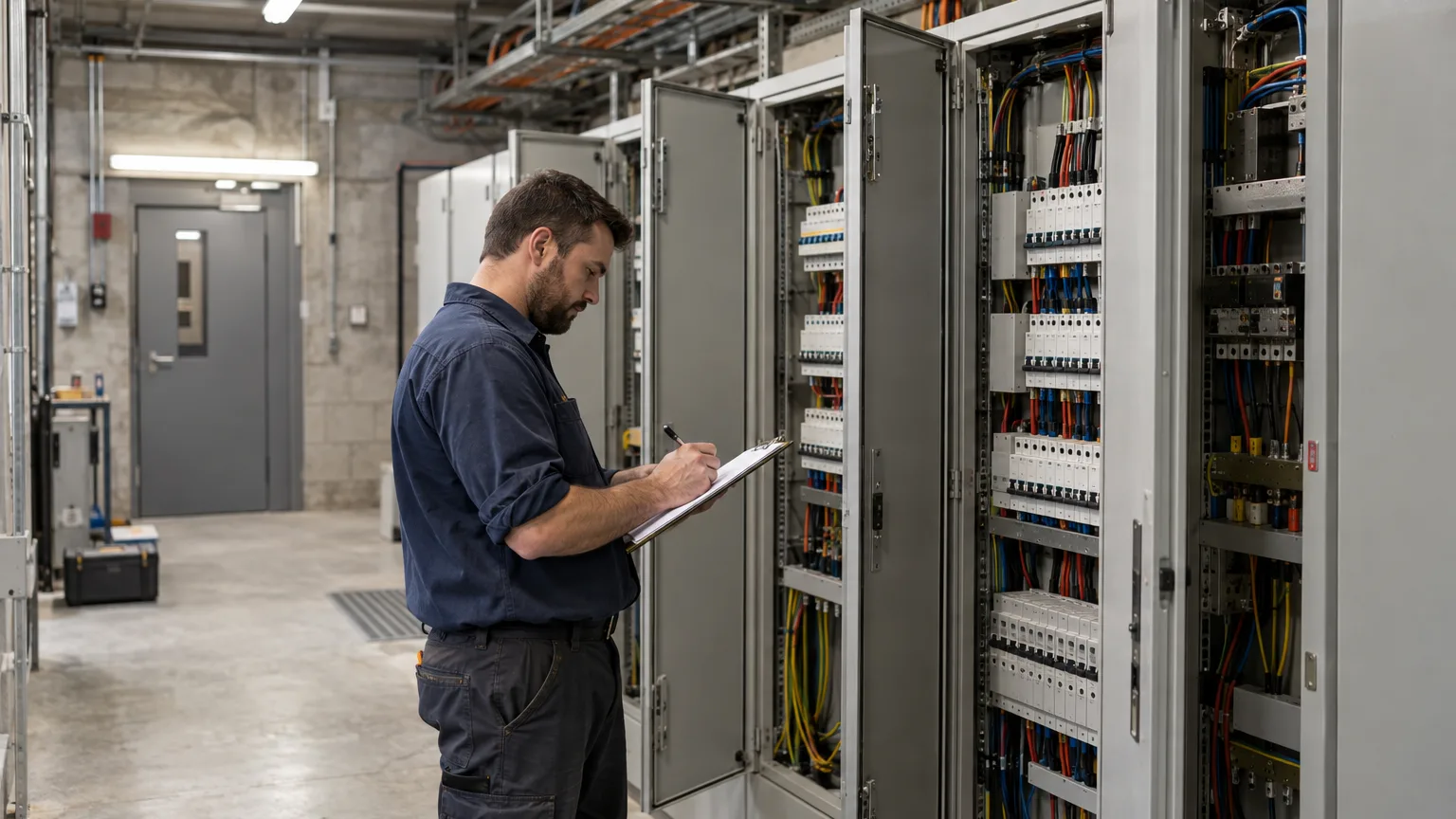
Somebody walks a route with a clipboard, and a fault that doubled a circuit's load ran for weeks before the bill showed it.
Tenants, departments or production lines share a bill nobody can allocate with evidence.
Equipment left running out of hours is invisible in a monthly total and obvious in an hourly profile.
| Signal | How it is read | What it tells you |
|---|---|---|
| Energy meters | RS485 Modbus RTU, from the meter register map | Energy, power, power factor and per-phase values |
| Pulse-output meters | Pulse output on a digital input | Consumption from older electricity, gas and water meters |
| Circuit current | Clamp-on current sensor over RS485 | Load on a circuit that has no meter |
| Room temperature | 1-Wire or PT1000 probe | A switch room running hot |
Four ports on one Genesis controller, and RS485 devices share a bus, so most sites need one unit.
Minimum and maximum on each sensor, with alerts to the people on the list. Acknowledgement is recorded against the alarm, so a handover shows what was already seen.
Readings are stored on the controller with their time and sent in order when coverage returns, so the record has no gap where the incident was.
Full-resolution history, exported to Excel for a report, an insurer or a contractor, or pulled into your own system through the REST API.
A device can be shared with a service company without sharing a login, and they see nothing else on your account.
The measurement is as good as the meter it comes from. A certified meter stays the instrument of record when the controller reads it; the controller gets its numbers off the wall and into a system.
Send the model and its Modbus register map and we add it.
Neither. The controller connects over 4G-LTE and runs on its rechargeable battery, with solar or a 6 to 32 V DC supply where readings need to be frequent.
Usually, yes. Over fifty sensor types are supported today and more are added on request, including RS485 Modbus instruments from their register map.
What needs watching, which instruments are already there, and whether the site has power and coverage. We come back with what a Genesis would read and what the installation involves.
Talk to us →