IoT for tank and bulk container manufacturers

A tank that reports its own level changes what its owner does: deliveries are planned from readings and not from visits. A battery powered controller on each tank sends the level over cellular, with no mains supply and no network at the site.

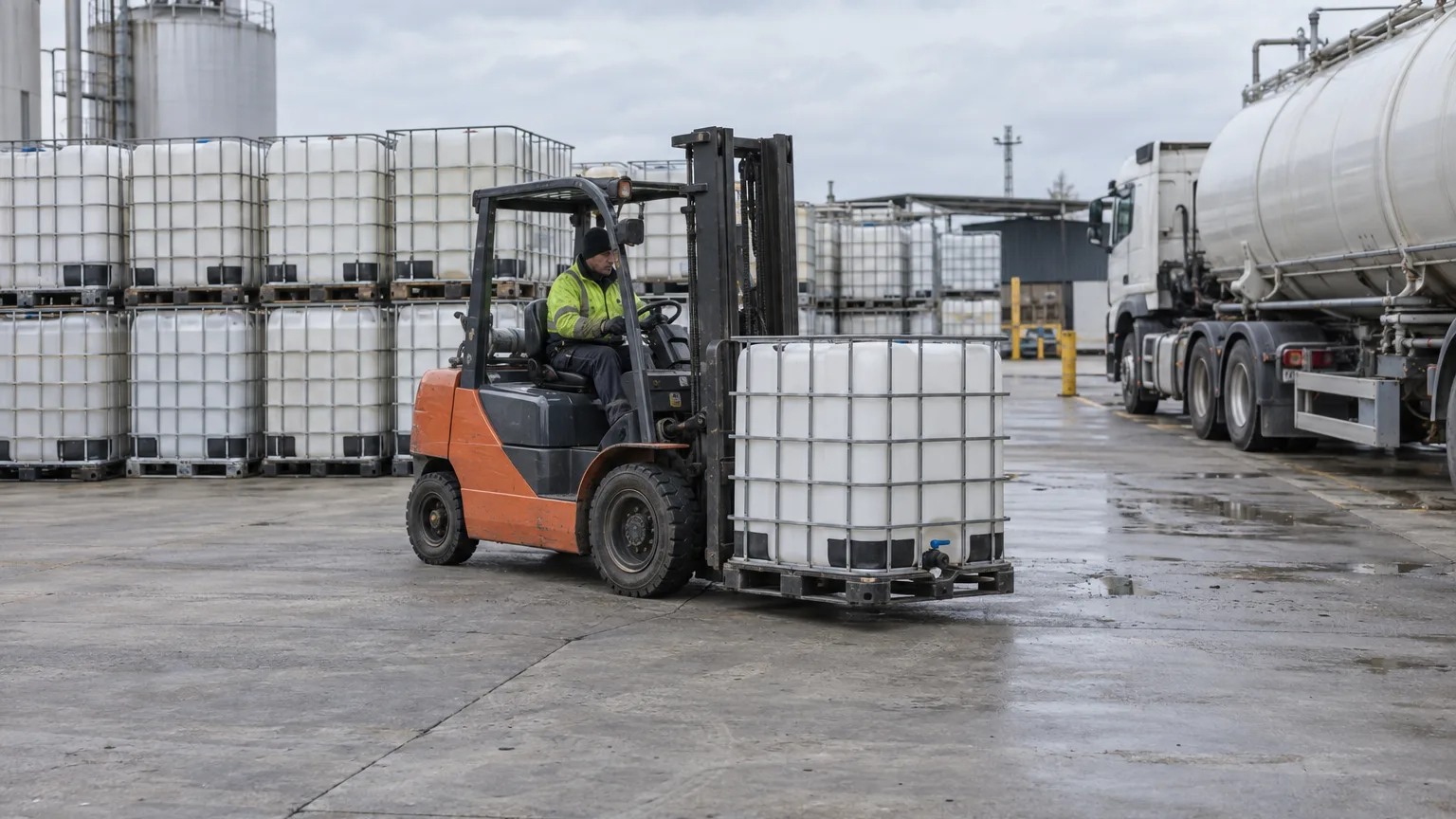
A forklift carries a white intermediate bulk container across a yard stacked with identical containers, with a tanker truck behind

What a tank fleet needs to answer

How full is it

For the owner of the contents and for whoever delivers them. One reading replaces a visit, and a year of readings replaces a delivery schedule built on habit.

When will it run out

The rate of use comes from the record. A tank that empties faster this month than last is worth a call before it is empty.

Was it opened

A contact on the lid or the valve records every opening with its time, which matters when the contents are costly or controlled.

What gets read on a tank

A starting list, not a fixed kit. The ports are set from the dashboard, so the same controller takes a different mix of sensors on a different model.

SignalHow it is readWhat it tells you
LevelUltrasonic or radar level sensor over RS485Contents, and the rate they are being used
Level by pressureAnalogue pressure transducer at the outletContents, where nothing can be mounted on top
Product temperature1-Wire or PT1000 probeContents that must stay warm or stay cool
Lid or valveDry contact on a digital inputEvery opening, with its time

Four ports on one controller, and RS485 devices share a bus, so most of this list fits on a single unit.

What your service team sees across the fleet

One machine reporting is a gadget. Every machine you have shipped reporting to the same place is a service business.

Every unit in the field, on one screen

Each machine reports to the same cloud. Your service desk sees which units are running, which are in alarm and which have gone quiet, before the customer calls.

Dealers and customers see only their own

Accounts nest: you sit above your dealers, and each dealer above its customers. A parent account cannot grant more than it holds, and a unit can be shared with a service company without handing over a login.

A record you can export

Readings and events are stored with their time and export to Excel, for a warranty claim, a service report or a disagreement about what happened and when.

Your own systems, through the API

A REST API with scoped tokens covers what the dashboard covers, so fleet data can feed your service system, your ERP or your customer portal directly.

How it fits into your product

Power from the machine

The controller takes 6 to 32 V DC, so it runs from a 12 or 24 V supply already on the machine. Its internal rechargeable battery keeps it reporting after the machine loses power, which is when the reading matters most.

Cellular, so nothing depends on the site

It connects over 4G-LTE from wherever the machine is installed. There are no Wi-Fi credentials to collect and no IT department to convince at each customer.

Your controller, over Modbus

If the machine already has a controller with an RS485 Modbus RTU port, give us its register map and we add it as a supported device. Its values and alarms then arrive alongside the sensor readings.

Your name on the dashboard and the apps

The web dashboard is served on your domain with your name, logo and colours, and the iOS and Android apps are published under your own developer accounts. Your customers log in to your product.

Nothing lost in an outage

Readings are held on the device while the network is down and sent in order when it returns, so the record has no gap where the incident was.

Sensors from the catalog for this equipment

Frequently asked questions

How long does it run without mains power?

It depends on two intervals that are set from the dashboard: how often it measures and how often it transmits. One transmission a day with hourly readings runs for years on the internal battery. A small solar panel covers more frequent reporting.

Can one controller read several tanks?

Yes. There are four ports and each sensor is bound to its own location, so a group of tanks within cable reach reports as separate tanks.

Do you sell the controller on its own, or with the cloud?

Either. Every controller comes with OmniCloud included, and the REST API does what the dashboard does if you would rather build your own front end on top of it.

What do you need from us to start?

The supply voltage available on the machine, the signals you want reported, the register map if the machine has a Modbus controller, and how your dealers and customers should be separated. A first batch on machines already in the field is the usual way to begin.

How is the firmware kept up to date once units are in the field?

Over the air, by cellular. Where there is no network at all, the unit raises its own Wi-Fi access point and takes the update from a phone or laptop beside it.
Tell us about the machine

What it is, what you want it to report, and who needs to see which units. We come back with how the controller wires in and how the accounts would be laid out.

Talk to us →